Masonry · Capital Region, NY

Foundation crack & masonry repairs.

Cracked foundation walls, deteriorating masonry or a settling basement corner deserve more than a patch. Capitol Concrete reviews the repair scope alongside water conditions and any structural assessment the building needs.

Free consultation. No obligation.

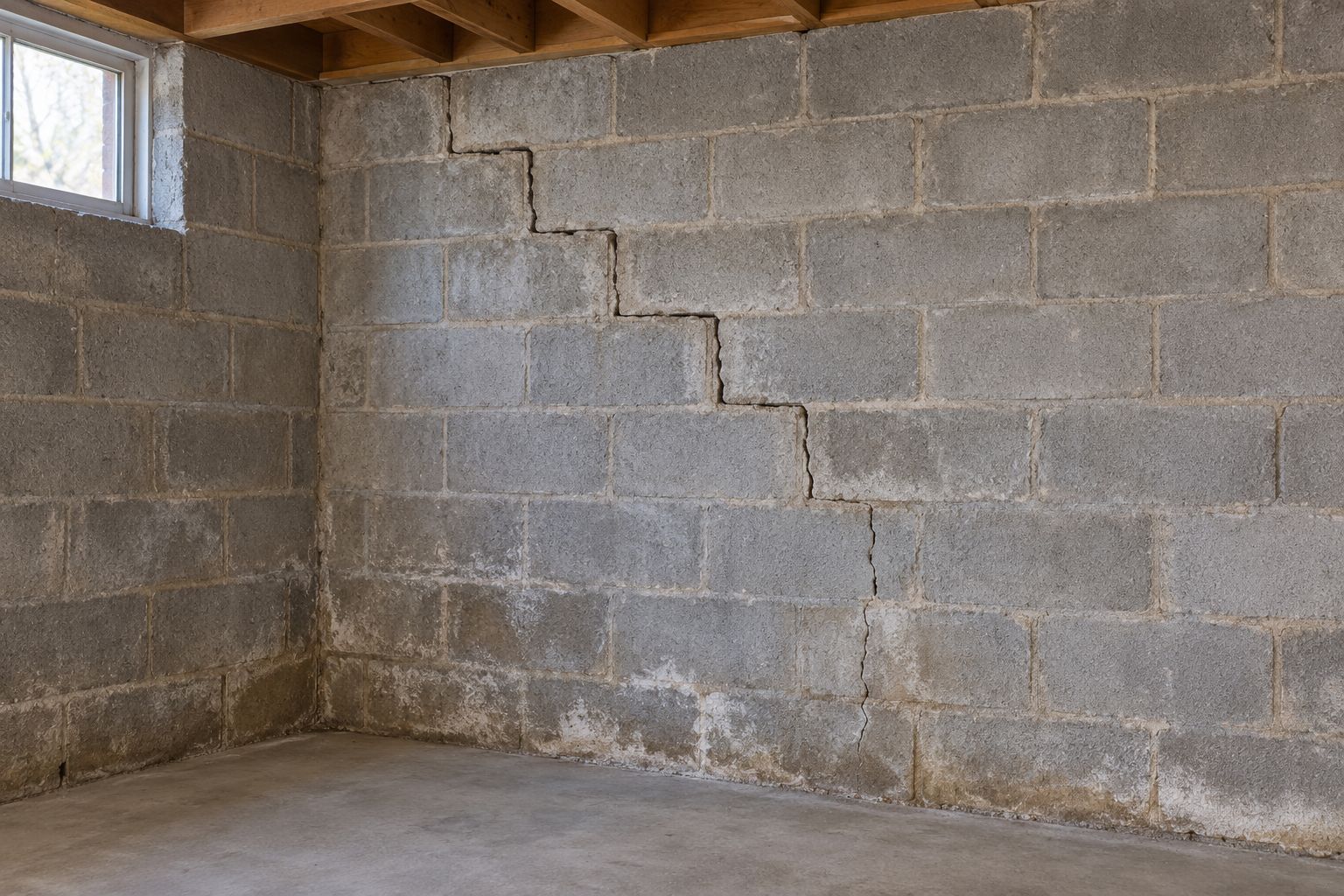
Stepped crack through mortar joints in an unfinished concrete-block basement wall
Capitol ConcreteInsured & bondedLocally owned
On this page

Understand your options

Separate the symptom from the repair.

A crack without visible displacement

A crack can admit water or reflect shrinkage, but its appearance alone does not establish the cause. Location, history and changes over time help determine the next assessment.

What to consider — A crack without visible displacement

Record when it appeared and whether it is widening or recurring after a prior repair.

Bowing, leaning or settlement

A displaced wall or dropping corner raises a different question: what is moving, and why? Cosmetic work should not precede an appropriate stability assessment.

What to consider — Bowing, leaning or settlement

A patch, coating or drain is not proof that the building has been stabilized.

Deteriorated masonry with water

Crumbling joints and damaged units may require masonry repair together with water management. The repair should address the material and the conditions around it.

What to consider — Deteriorated masonry with water

Identify recurring water entry and previous waterproofing or repointing work.

Build a history of the movement

Wide photographs show how cracks relate to corners, openings and the floor; close photographs show the affected material. Note sticking doors, changed floor levels or weather-related water entry. Terms such as masonry creep or dirt creep are not diagnoses. Describe what is actually happening so the appropriate assessment can be arranged.

Repair the material after resolving the structural question

Concrete crack repair, masonry restoration and engineered stabilization are different scopes. We undertake agreed concrete and masonry work, with any necessary structural findings informing the repair. Do not assume a particular injection, underpinning or wall-support system is included. If a wall looks unstable or changes suddenly, keep clear and seek prompt professional assessment.

Treat water and wall movement as connected but separate work

Drainage improvements may reduce one contributing condition without reversing damage already present. Conversely, repairing a crack may leave another water entry route. Coordinate the building repair and water-management sequence so neither is presented as a universal fix for the other.

From first conversation to completion

How the work comes together.

  1. Document the condition

    Gather the pattern, timing, water history and previous assessments.

  2. Establish the repair basis

    Resolve structural questions and separate masonry, concrete and drainage responsibilities.

  3. Complete the agreed work

    Carry out the defined repairs and connected restoration with clear scope limits.

Working with Capitol

In our customers’ words.

A customer’s experience with our team.

Masonry
Review excerpt:

“Their attention to detail and ability to stay on schedule made my job so much easier.”

Doug CassidyProject Manager
Read full reviewClose full review from Doug Cassidy

“As a project manager, I’ve worked with several contractors, but this masonry team stands out. Their attention to detail and ability to stay on schedule made my job so much easier. We had some tricky stonework that required precision, and they nailed it. The crew was professional, responsive, and kept the site clean. I’ll definitely be recommending them for future projects.”

Before you approve the work

Understand what the repair is intended to fix.

Stopping a leak, repairing damaged masonry and stabilizing a moving structure are different objectives. The estimate should identify which problem it addresses.

What can a crack tell you—and what can it not?

Crack location, displacement, changes over time and the surrounding building condition all matter. A crack’s width or direction alone cannot establish a cause. A sinking basement-floor corner is also not automatically the same as a settling load-bearing footing. Document the observations and ask what further assessment supports the proposed repair. Bowing, new displacement or rapidly changing conditions warrant prompt qualified evaluation, not a cosmetic cover-up.

When is a patch or injection a legitimate repair?

A compatible repair can be appropriate for a suitable, understood defect. The problem is promising that filling a crack will resolve an unassessed cause. Some treatments target water entry; structural repairs have different design and verification needs. Ask the contractor to state the purpose, limits and prerequisites of the proposed method. Where movement is involved, the response may need a structural or geotechnical professional before a construction scope is selected.

Will drainage alone straighten a bowing wall?

Water management may be part of the response, but it does not automatically restore the capacity or position of a wall that has moved. Soil loading, water conditions and the structure’s support need evaluation together. The terms “soil creep” or “masonry creep” should not stand in for a diagnosis. Keep drainage work, structural assessment and any designed repair explicitly separated in the estimate so the intended outcome is clear.

Before the project is handed over

Keep dated condition photos and the agreed repair information. Ask what changes should trigger reassessment and how any specified monitoring will be carried out.

Link to this estimate guide

Your investment

What shapes the estimate?

Material, location, access, extent of deterioration, water conditions and assessment requirements influence repair cost. A local crack repair and structural stabilization are different scopes. We establish the work we can price after reviewing the condition and any necessary professional findings.

What we can include
  • Foundation crack repair within an assessed scope
  • Concrete and masonry deterioration repairs
  • Coordination with drainage and waterproofing
  • Identification of further structural-assessment needs

A useful first conversation

Bring the project into focus.

Start with the property address and the work you have in mind. Helpful details include:

  • Wide and close photos of the wall, floor and exterior ground
  • When cracks or movement appeared and whether they are changing
  • Previous repair records, water history and any engineering report
Tell us about your project

We arrange a site visit and define the included work, responsibilities and project-specific warranty terms. Changes to scope, cost or timing are documented before changed work begins.

Before you begin

Questions about this work.

All project FAQs
Can you fix a bowed basement wall by patching it?

A patch does not establish that a moving wall is stable. Bowing or displacement needs appropriate assessment, with any structural repair designed and assigned to qualified parties. Concrete or masonry repairs should follow that plan.

What if someone calls the problem masonry creep or dirt creep?

Describe the actual symptoms: leaning, bulging, cracks, settlement or water. Those informal terms do not identify the cause or the correct repair. Photos, history and an on-site assessment are more useful than a label.

Will repairing a crack stop all basement water?

Not necessarily. Water may enter through other openings, joints or floor areas, and drainage conditions may need attention. The repair and water-management scopes should address the observed conditions rather than promise a universal result.

Your local construction team

Let’s look at your project.

Serving Albany, Saratoga, Schenectady and Rensselaer counties, plus Lake George and Gloversville. Contact us first; consultations are arranged at the project site.

Request a Free Estimate

Planning & care

Read before you build.

Technical reading behind this guidance

General planning references, not project specifications or evidence of a Capitol certification. Site conditions and the agreed design determine the work.