Excavation · Capital Region, NY

Drainage, French drains & yard grading.

Yard drainage, French drains and grading for persistent water problems. We trace where the water comes from and where it can discharge before selecting the work your property needs.

Free consultation. No obligation.

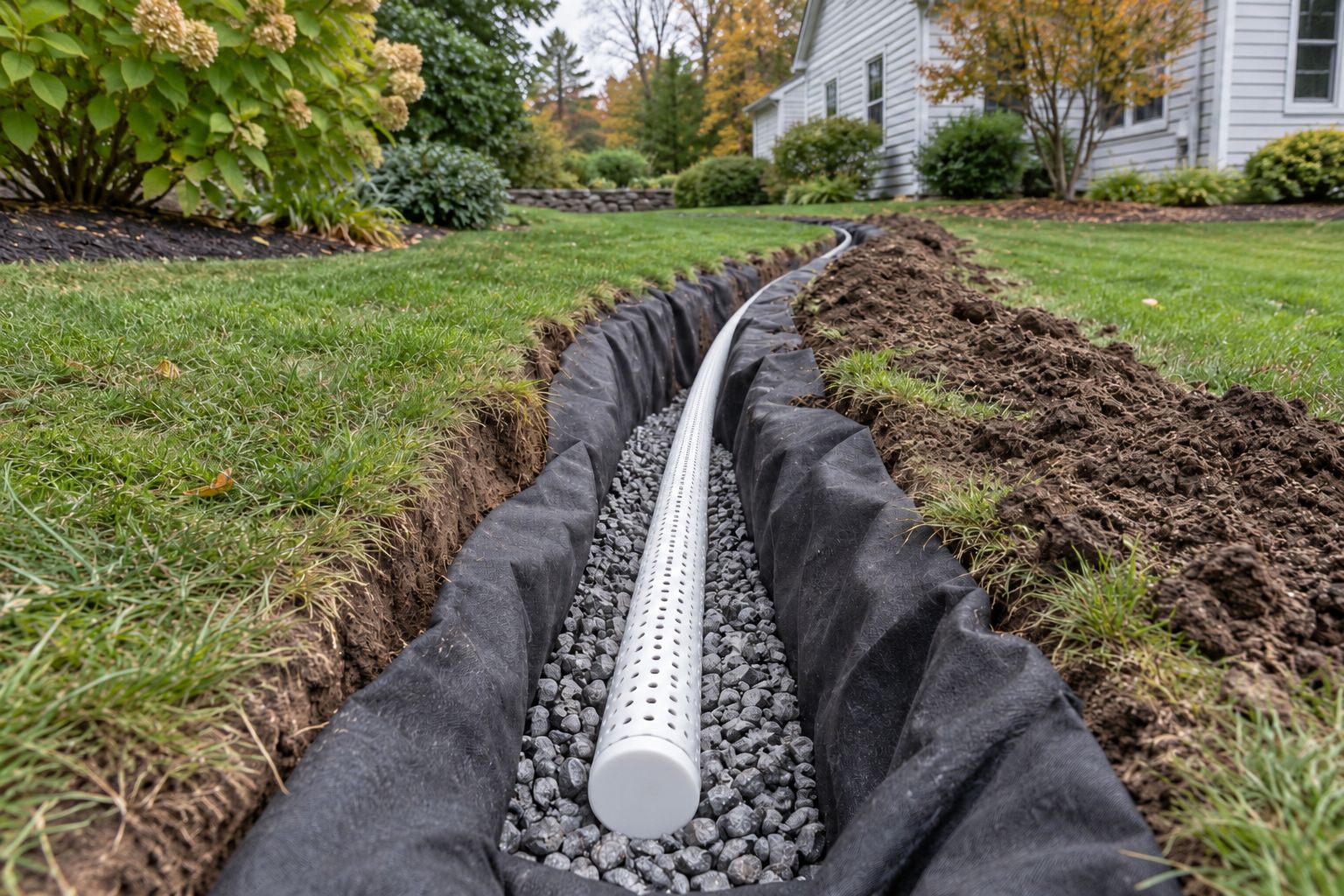
Perforated drainage pipe on clean gravel in a fabric-lined trench through a residential lawn
Capitol ConcreteInsured & bondedLocally owned
On this page

Understand your options

Match the response to the water.

Water running across the surface

A yard low spot, roof discharge or uphill runoff may call for grading, a surface inlet or a collection channel. The goal is to intercept the actual flow path.

What to consider — Water running across the surface

Note what happens during rain and where the water goes after the storm.

Water moving through the ground

A French drain collects subsurface water along a designed route. It needs suitable surrounding materials, a viable discharge and a way to remain serviceable.

What to consider — Water moving through the ground

Buried pipe alone is not a complete drainage solution.

Water at the basement floor

Water rising at cracks or the wall-floor joint can require a foundation drainage approach. Wall defects and plumbing or condensation issues must also be considered.

What to consider — Water at the basement floor

Drainage and structural repair are different scopes; one does not establish that the other is unnecessary.

Observe the water event, not only the puddle

Photos during rain or snowmelt help show the direction and source of flow. Note whether water appears immediately, hours later or through dry weather. The pattern helps distinguish concentrated runoff from other conditions. A drain should be selected for the problem observed, rather than because the name sounds like the standard answer.

Establish the discharge before the trench

The collection point, route and destination must work together. Identify the available elevation, outlet condition and any approval or neighboring-property constraints. Maintenance access matters because a hidden blockage can defeat the system. The installation plan should describe the destination of the water, not just the length of pipe.

Coordinate drainage with the building

Exterior grading and roof-water management can reduce water at the foundation, while below-grade conditions may need a different response. If cracks, bowing or settlement accompany the water, include appropriate assessment. Correcting runoff does not repair displaced masonry or prove a moving foundation is stable.

From first conversation to completion

How the work comes together.

  1. Trace the source

    Record the timing, flow direction and affected indoor or outdoor areas.

  2. Choose the route

    Review collection, discharge, access and related building concerns.

  3. Complete the system

    Install the agreed scope, restore surfaces and explain maintenance access.

Working with Capitol

In our customers’ words.

A customer’s experience with our team.

Excavation
Review excerpt:

“They hit every deadline and kept the project moving smoothly.”

Tim ReinerGeneral Contractor
Read full reviewClose full review from Tim Reiner

“We brought them on for a large-scale excavation project, and they exceeded expectations. Their team was efficient, safety-conscious, and worked seamlessly with our crew. They hit every deadline and kept the project moving smoothly. Communication was clear from start to finish, and the quality of work was spot on. Definitely a reliable partner for future projects.”

Before you approve the work

Understand the water problem before the drain.

A drainage estimate should explain what water is being collected, how it will get into the system and where it can leave.

Is the problem surface runoff or water in the ground?

Water crossing a yard after a storm and water rising through the ground can require different collection methods. Record when the problem occurs and where water first appears, rather than starting with a request for a particular pipe. Roof runoff, grading and below-grade water should be considered together. A trench filled with stone is not evidence that the actual water path has been intercepted.

What makes a French drain a system rather than a trench?

The collection zone, filter materials, pipe arrangement and discharge must suit the ground and water source. Sediment management matters because a drain can lose function if soil moves into its collecting space. A gravity system needs a workable outlet; a pumped system adds equipment, power and maintenance dependencies. Ask for the proposed route and discharge arrangement, not just a price per foot of trench.

What should you expect after installation?

Establish which symptom the work is intended to improve and how performance will be reviewed. A yard drain does not automatically stabilize a moving foundation or resolve indoor condensation. Drainage components also need accessible maintenance points and an outlet that remains clear. If the original diagnosis is uncertain, discuss what investigation is needed before accepting a broad promise that every wet area will be eliminated.

Before the project is handed over

Keep the route and outlet information. Review performance during relevant wet conditions and maintain the system as specified; do not redirect other drainage into it without checking capacity and suitability.

Link to this estimate guide

Your investment

What shapes the estimate?

The water source, route length, excavation access, discharge arrangement, surface restoration and associated repairs affect cost. Interior and exterior approaches have different scopes. A site review is needed before deciding which work is appropriate.

What we can include
  • Surface drainage and collection channels
  • French drains and subsurface drainage
  • Grading and drainage interfaces
  • Stormwater and specified discharge coordination

A useful first conversation

Bring the project into focus.

Start with the property address and the work you have in mind. Helpful details include:

  • Photos or video during the water event and when it is dry
  • Where water appears, how long it remains and whether it follows rain or snowmelt
  • Known drains, downspouts, discharge points and any foundation concerns
Tell us about your project

We arrange a site visit and define the included work, responsibilities and project-specific warranty terms. Changes to scope, cost or timing are documented before changed work begins.

Before you begin

Questions about this work.

All project FAQs
Will a French drain stop water coming through my basement floor?

It may be part of a suitable water-management plan, but the source and site conditions need assessment first. Groundwater, surface runoff and other causes are not interchangeable, and a drain needs a viable collection and discharge arrangement.

Could grading solve the problem instead?

Grading can be relevant when surface water is being directed toward an unwanted area. It does not automatically address a high water table or building defects. We review the pattern of water and the surrounding site before discussing options.

Your local construction team

Let’s look at your project.

Serving Albany, Saratoga, Schenectady and Rensselaer counties, plus Lake George and Gloversville. Contact us first; consultations are arranged at the project site.

Request a Free Estimate

Planning & care

Read before you build.

Technical reading behind this guidance

General planning references, not project specifications or evidence of a Capitol certification. Site conditions and the agreed design determine the work.