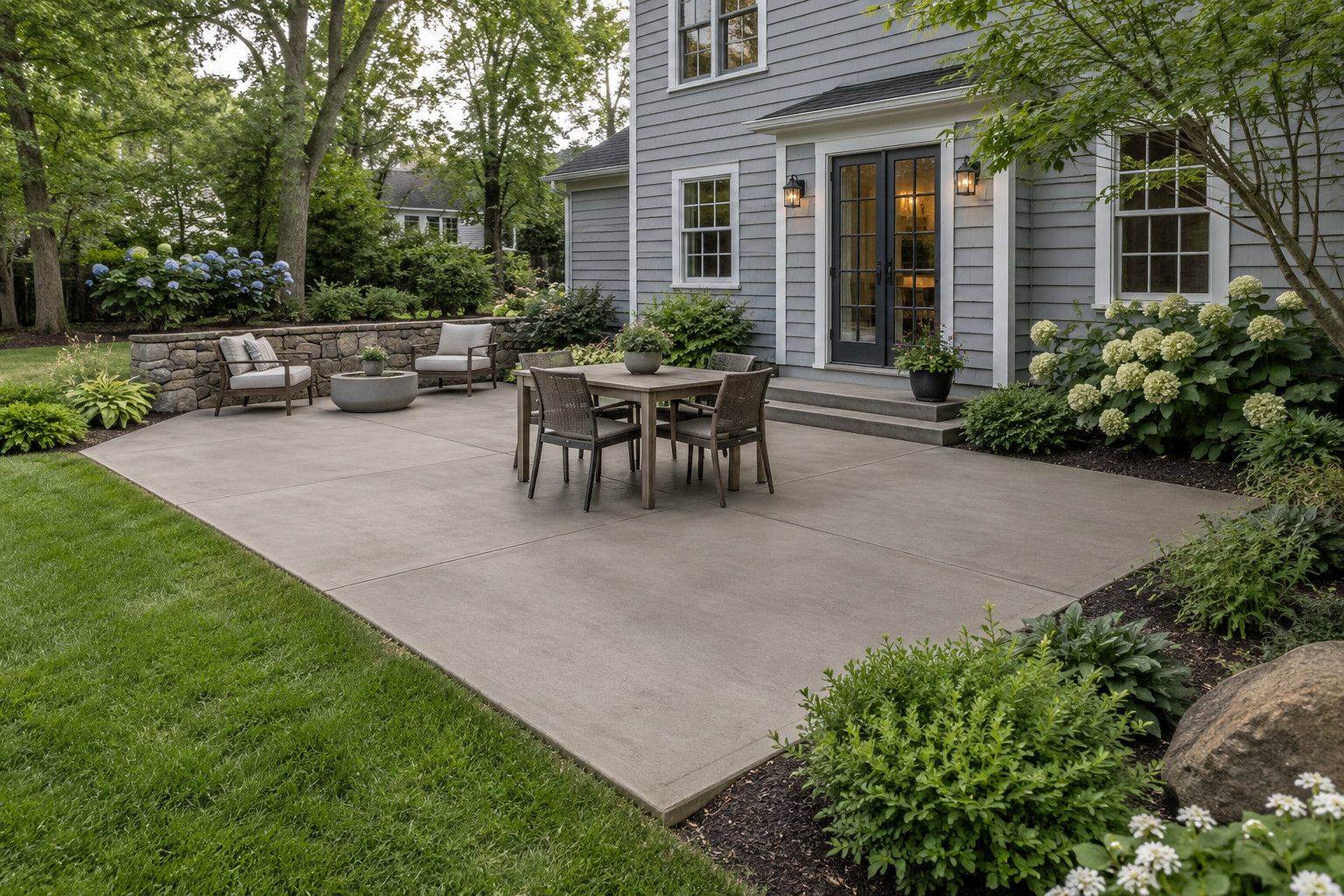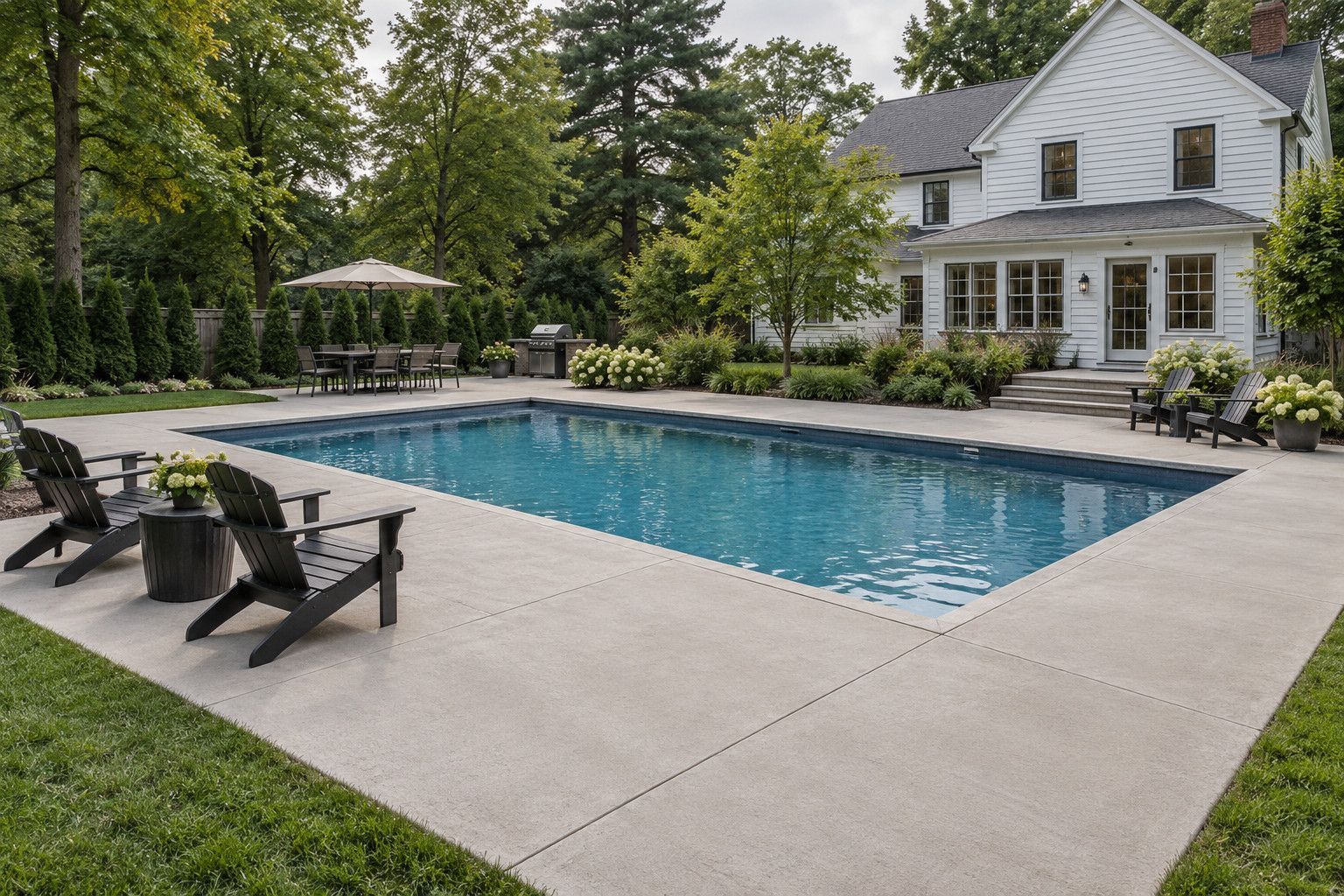
A concrete pool deck is part of a larger outdoor project. Its layout must work with the pool edge, doors, gates, drainage, equipment access and the places where people sit or walk. Whether you are replacing an existing surround or planning a new pool, settle those relationships before comparing finish options or square-foot estimates.
Capitol Concrete constructs concrete pool decks and surrounds as complete outdoor projects or defined concrete packages. Our Capital Region coverage includes Albany, Saratoga, Schenectady and Rensselaer counties, plus Lake George and Gloversville. An initial conversation should establish the site, project stage and which parts of the work you want coordinated.
Define the complete pool project
Begin with a drawing that includes more than a strip of concrete around the water. Show lounge chairs, dining furniture, circulation paths, steps, gates and the route from the house. Consider where wet feet will travel and how equipment will reach the pool for maintenance.
For a new installation, identify who is responsible for the pool, coping, concrete surround, electrical work, fencing and landscaping. For replacement work, establish what will remain and how it will be protected. A written list of responsibilities is especially useful when several contractors share the yard.
If the project includes a retaining wall, outdoor kitchen, shade structure or larger patio, include it in the first conversation. Capitol’s general contracting services can be discussed alongside the concrete scope. The proposal should identify the building work, participating trades and any design responsibilities rather than leave them implied.
Compare materials by use as well as appearance
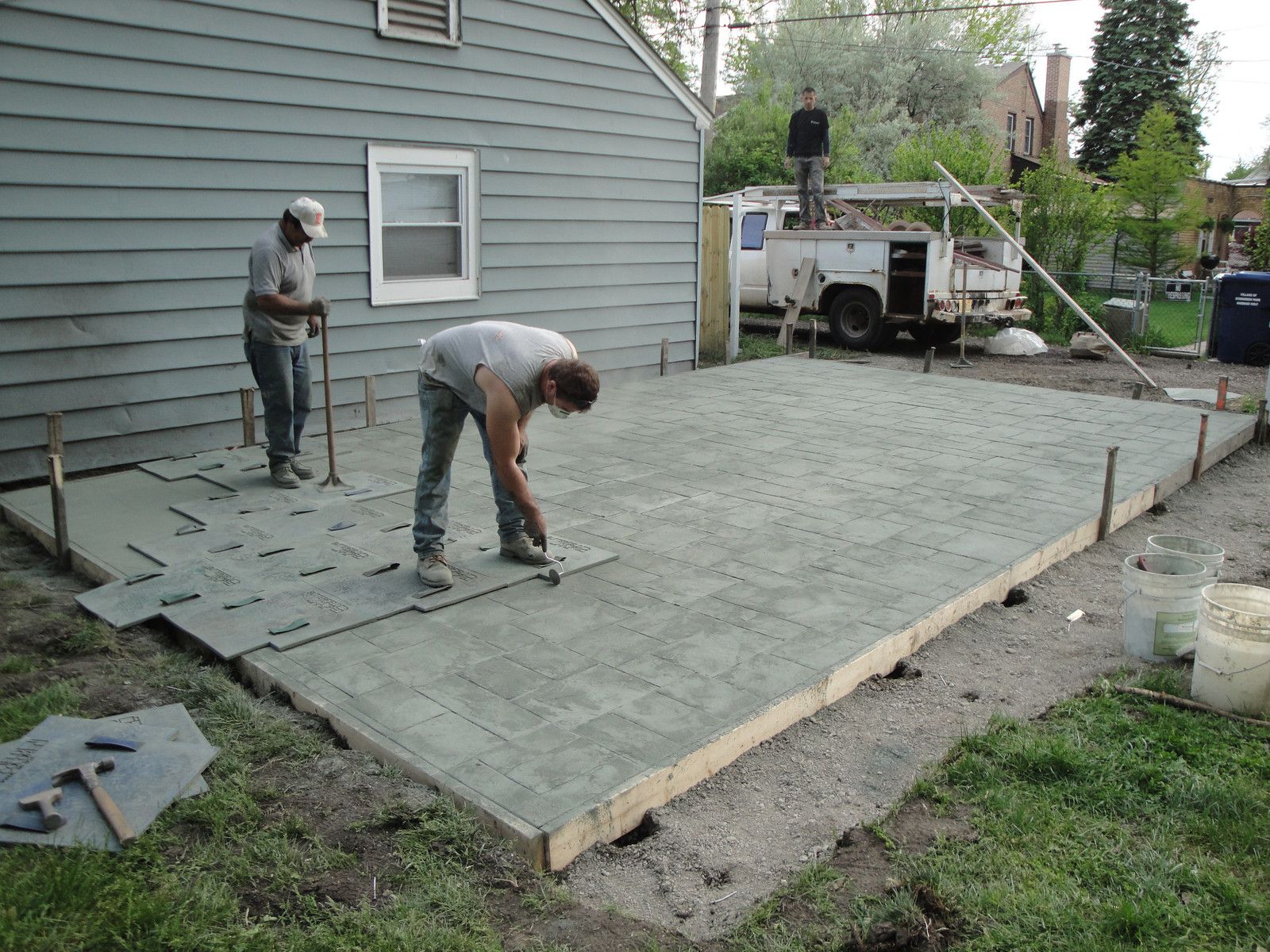
Concrete can support a restrained pool setting or a decorative stamped design. Ask to review the proposed surface texture, color and finish as a coordinated selection. Think about barefoot use, wet circulation, cleaning and the relationship to coping and nearby masonry.
Request information specific to the finish or sealer being proposed, including care and reapplication needs. An attractive photograph is not evidence that a product will suit the conditions around your pool. Ask how the selection is intended to perform in the areas that regularly get wet, and what ongoing maintenance is expected.
Make pattern decisions at the scale of the whole surround. Highly detailed patterns, borders and multiple colors can compete with the pool and landscaping. A simpler main surface with a deliberate edge treatment may suit your property; a decorative approach may be equally appropriate when its details are resolved together.
For a broader material comparison, see our patio guide. For a stamped finish connecting the pool to an entertaining area, review the stamped concrete planning checklist.
Coordinate levels, drainage and the pool edge
Ask the project team to establish the finished elevations around the pool, at doors and along adjoining paths. Show where water currently collects and where runoff is intended to go. Drainage decisions should be coordinated with the entire property and pool design, including any collection system specified for the surround.
The pool edge is a critical coordination point. Confirm how the deck meets the coping and pool structure, who supplies each component and which details require approval from the pool installer or designer. Resolve cover anchors, handrails, ladders and other fittings before placement rather than treating them as afterthoughts.
Ask for the planned joint locations and how adjoining elements can move independently where required by the design. These functional details should be considered with the appearance of the deck. The NRMCA joint guide explains the different purposes of contraction, isolation and construction joints.
Plan the sequence and seasonal work
Work backward from the completed outdoor space. Pool installation, buried services, inspections, surrounding concrete, fencing and restoration may depend on one another. Ask which decisions must be final before each stage begins and who will confirm readiness for the next contractor.
A fall or early-spring schedule needs a specific weather plan. NRMCA notes that lower concrete temperatures slow setting and strength development, affecting construction timing. Its cold-weather guidance supports discussing protection and scheduling with the contractor, rather than assuming a warm afternoon resolves the issue.
Pool barriers and associated electrical work also belong in the planning conversation. New York’s Department of State identifies these as regulated parts of residential pool projects. Use its building standards FAQ as a starting reference and confirm the requirements for your project with the local building department.
Understand the pool-deck cost drivers
A meaningful estimate distinguishes the concrete surround from the complete outdoor project. Ask what is included in each price and whether quantities are based on a measured plan or an early concept.
- Existing conditions: demolition, access, protection of the pool and removal of old material.
- Preparation: excavation, supporting materials, grade changes and drainage work.
- Geometry: the pool shape, steps, edges and connections to surrounding surfaces.
- Finish and fittings: decorative work and coordination of anchors, rails or other installed items.
- Wider scope: patios, walls, paths, fencing coordination and landscape restoration.
- Sequencing: separate work stages, restricted access and weather-related protection.
When requesting an alternate, keep the underlying scope clear. Changing the decorative finish is different from removing drainage or reducing the area included. Written alternates make those choices easier to evaluate.
Prepare your pool-deck project information
- Send the property address, pool plan or photographs, approximate deck layout and intended timing.
- Identify the pool installer and other contractors already appointed.
- Mark existing surfaces, structures and planting that must be protected.
- Confirm the pool-edge detail, drainage responsibilities and installation sequence.
- Include cleanup, restoration, permitted-use timing and care instructions in the proposal discussion.
Common pool-deck questions
Is stamped concrete an option around a pool?
It can be considered. The texture, finish system, wet use and maintenance expectations need to be evaluated together. Ask to review the proposed selection for the actual application.
Can you replace the surround around an existing pool?
Replacement inquiries begin with the existing deck, pool edge and access conditions. The assessment should establish removal limits, protection and any work needed before the new concrete is installed.
Can the deck and a larger outdoor project be quoted together?
Yes. Describe the full project at the outset so the proposal can establish the concrete, related construction and trade coordination you want included.
Discuss your pool surround
Call (518) 690-6863 or use the contact details on our estimate page to arrange a free consultation. Bring the pool plan, photographs or an initial layout so we can discuss the complete scope and next steps for a site visit.